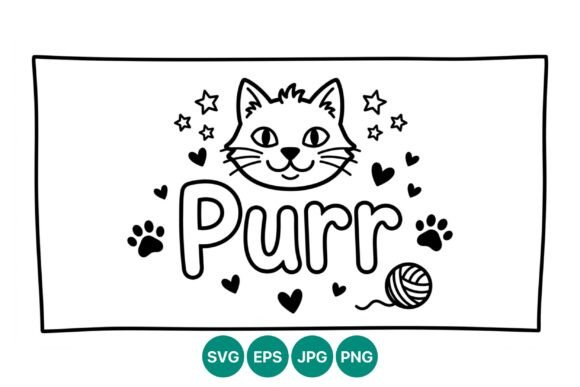
Purr Cat Face Vector Art
First Impression: Sweet, Simple, and Stitch-Ready
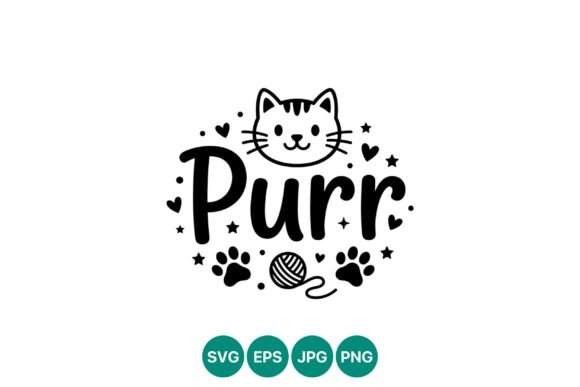
Opening the ZIP folder for Purr Cat Face Vector Art, I felt that familiar little lift—the kind you get when a design just *feels* right for real-world stitching. It’s black-and-white line art, clean and uncluttered: a smiling cat face with “purr” arched above it, surrounded by tiny stars, hearts, paw prints, and a yarn ball. No gradients, no shadows—just confident outlines. That’s gold for embroidery designers. The layout is compact but balanced, with breathing room between elements—not too tight, not too sparse. It reads instantly as playful, warm, and handmade-friendly. This isn’t a busy illustration meant for print-on-demand posters; it’s built for translation into thread.
A Real Project in Mind: Embroidering a Linen Baby Apron
Last week, I prepped a custom order—a linen apron for a new mom who runs a small-batch baby goods shop. She wanted something soft, gender-neutral, and quietly joyful. Purr Cat Face Vector Art landed perfectly: the yarn ball nods to knitting and care, the cat face adds gentle personality, and the stars and hearts whisper “nursery charm” without tipping into cliché. I sized it to fit a 4x4 hoop comfortably, centered on the chest pocket. What stood out during digitizing was how forgiving the line weight is—consistent, medium-thin strokes hold up beautifully in satin stitch or running stitch, especially at 3–4 inches wide. No fragile spindles or micro-details that vanish under thread.
Where It Shines (and Where to Pause)
Purr Cat Face Vector Art excels on stable, medium-weight fabrics: cotton tea towels, canvas tote bags, structured sweatshirt fronts, and denim patches. Its open composition means low stitch density—ideal for lightweight stabilizer and quick hooping. On a baby onesie? Yes—if you use tear-away + light cutaway and keep the size under 3 inches. On a curved cap front? Possible, but scale down to 2.5" and avoid placing the yarn ball or star cluster right over the crown seam—those fine lines can distort.
Use caution on stretchy knits (like jersey t-shirts) without proper stabilization—those delicate paw prints and heart outlines need firm support to stay crisp. Dark fabrics demand high-contrast thread (think white or cream), and thin fabrics like voile may show stabilizer shadow unless you test first. And while the “purr” lettering is legible, don’t shrink it below 1.5 inches—it starts to blur in fill stitch. This isn’t an applique design; it’s a line-art-based machine embroidery design best suited for satin, running, or outline stitches—not dense fill-heavy motifs.
What It Adds to Your Finished Product
This isn’t just decoration—it elevates perception. A tote bag with Purr Cat Face Vector Art feels intentional, curated, and emotionally resonant. Customers notice the warmth before they notice the craft—but they *feel* the care. For Etsy sellers and small shop owners, that translates directly to trust and repeat buyers. It reads as handmade product, not mass-printed clipart. The black-and-white foundation makes color decisions easy: monochrome for modern boutiques, pastel threads for baby items, bold neons for teen apparel. And because it’s vector-based, scaling up for a pillow cover or down for a cap doesn’t sacrifice clarity—unlike raster PNGs that pixelate.
It also works hard across categories: holiday embroidery (add a tiny red bow in post-stitch), personalized gifts (“Purr + Name” with simple customization), nursery decor, wedding favors (embroidered on linen napkins), and even craft fair merchandise where visual recognition matters. You won’t confuse this with generic cat clipart—it’s got personality, rhythm, and restraint.
Practical Designer Notes Before You Stitch
- Always test first: Run a sample on scrap fabric matching your final project’s weight and stretch.
- Check thread color contrast: Especially on dark or textured backgrounds—what reads clearly on screen may disappear in thread.
- Review stitch density: Since this is line art, expect mostly satin and running stitches—not heavy fills—so it’ll sew quickly and lie flat.
- Confirm hoop size: The original vector scales well, but verify your digitized version fits your standard hoop before batching orders.
- Inspect small details: Zoom in on the yarn ball’s loops and paw print toes—make sure they’re digitized with clean jump stitches and no thread nests.
- Mock it both ways: Preview in black thread on white fabric *and* white thread on navy—this design’s charm lives in contrast.
- Stabilizer matters: Use lightweight tear-away for stable wovens; add cutaway for knits or lightweight linens.
- Licensing check: Since this falls under Illustrations and Graphics, confirm whether the license permits commercial embroidery use—especially if selling finished embroidered patches or digital embroidery files.
Final Thought: A Quietly Confident Design Choice
Purr Cat Face Vector Art doesn’t shout. It purrs—and that’s its strength. In a market flooded with overdesigned, oversaturated graphics, this one earns space on a kitchen towel, a baby blanket, or a boutique sweatshirt because it’s clear, kind, and technically sound. It supports your craftsmanship instead of competing with it. Whether you’re an embroidery designer building a portfolio, an Etsy seller refreshing your bestsellers, or a craft business owner curating meaningful small shop products—this is the kind of design that makes customers pause, smile, and remember your name. Not because it’s flashy, but because it’s *true*: simple, stitched with care, and ready for real life.