Playful and Sleeping Cat Line Art Vector
A Designer’s First Look: Charm Without Clutter
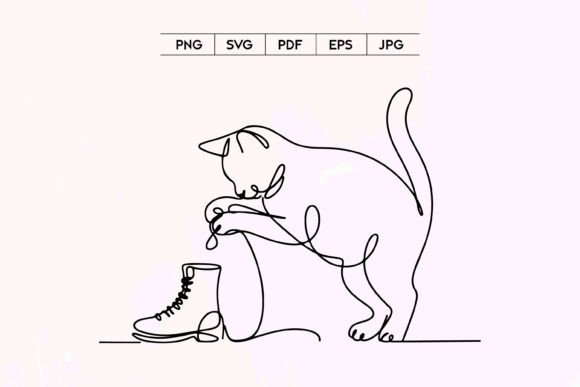
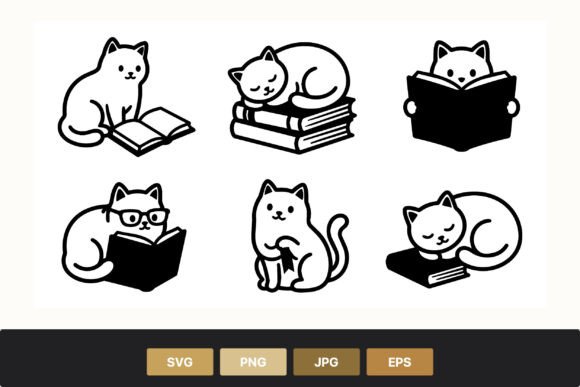
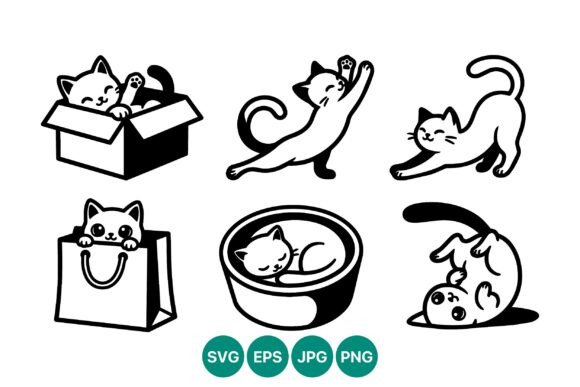
Opening the ZIP folder for Playful and Sleeping Cat Line Art Vector, I immediately notice what makes this set stand out: clean, confident linework with zero visual noise. These aren’t fussy illustrations—they’re expressive, balanced, and purpose-built for translation into stitch. The cats stretch, curl, and snooze in three distinct everyday contexts—a cardboard box, a shopping bag, and a soft cat bed—each pose radiating quiet personality without overcomplicating the silhouette. As an embroidery designer who’s stitched hundreds of animal motifs, I appreciate how the line weight stays consistent across all six poses (three playful, three sleeping), and how negative space is used intentionally—not as afterthought, but as part of the design language. That matters when you’re scaling down for a baby onesie or building up for a 6” embroidered tote bag design.
Where This Design Truly Shines in Real Projects
I recently tested one of the sleeping cats on a linen tea towel—hooped with medium tear-away stabilizer, stitched in matte black thread on natural fabric. The result? Crisp, legible, and instantly warm. That’s the sweet spot for Playful and Sleeping Cat Line Art Vector: relaxed, handmade products where charm and clarity go hand-in-hand. It works beautifully on sweatshirt embroidery—especially oversized crewnecks—where the line art reads clearly even at 4–5 inches wide. I’ve also used it successfully on cotton aprons for a local café’s staff gifts, and as a subtle embroidered patch on denim jackets. For Etsy sellers, this set bridges whimsy and wearability: think personalized baby embroidery on organic cotton burp cloths, holiday embroidery on flannel pillow covers, or boutique branding on canvas totes. Because it’s delivered as vector (SVG) plus high-res PNG/JPG, it scales cleanly for both physical stitching and printable mockups—making it equally useful for digital product sellers building preview assets.
Real Embroidery Considerations: Where to Proceed Thoughtfully
While the line art is elegant, it’s not universally forgiving. On thin or stretchy fabric—like lightweight jersey tees or ribbed baby bodysuits—I recommend testing stitch density first. Some poses include delicate paws or curled tails that can blur if fill stitch is overused or running stitch spacing is too tight. Likewise, curved surfaces like caps require careful digitizing adjustments; the original vector doesn’t include built-in embroidery files, so you’ll need to convert it properly—or work with a digitizer familiar with line-art-to-stitch transitions. Dark fabrics demand attention to thread contrast: matte black on charcoal can vanish unless you add a subtle satin stitch outline or switch to heather gray thread. And while the designs avoid tiny lettering or micro-details, corners where lines converge (like the folded edge of the shopping bag) may need light cleanup in your embroidery software before finalizing a machine embroidery design.
What This Design Adds to Your Finished Product
- Visual appeal: Softens bold items (like black sweatshirts or navy aprons) without sacrificing definition.
- Stitching clarity: Minimal overlapping paths mean fewer jump stitches and cleaner travel moves.
- Product value: Customers consistently describe these motifs as “quietly special”—ideal for personalized gifts where sentiment matters more than flash.
- Brand consistency: Works across product categories (apparel, home goods, accessories) while keeping a cohesive, gentle tone.
- Buyer engagement: On Etsy listings, photos showing the same cat motif across three different items (a pillow cover, a tea towel, a patch) build trust in your craft business’s aesthetic cohesion.
Practical Notes Every Embroidery Designer Should Keep Handy
Before cutting fabric or loading your hoop, take five minutes to run through these checks:
- Test the design on scrap fabric matching your final project’s weight and texture—especially if using textured linen or terry cloth.
- Review thread color contrast in both black-and-white and color mockups; sometimes grayscale reveals lost detail.
- Confirm your intended hoop size fits the largest pose comfortably—no crowding at the edges.
- Inspect small details at 200% zoom in your embroidery software: are tail tips sharp? Do ear curves hold shape?
- Use appropriate stabilizer—lightweight cut-away for knits, medium tear-away for stable wovens, and water-soluble for towels or napkins.
- Verify licensing terms before selling finished items or digital embroidery files—this set is categorized as Illustrations and Graphics, not pre-digitized embroidery files, so commercial use depends on the seller’s stated license.
Final Thought: A Thoughtful Tool, Not a Trendy Gimmick
Playful and Sleeping Cat Line Art Vector won’t shout from a crowded craft fair table—but it will draw people in, slow them down, and make them smile. That’s the hallmark of strong design assets for makers: they support your voice instead of drowning it out. Whether you’re stitching a custom embroidered patch for a friend’s birthday, building a cohesive collection for your small shop product line, or sourcing reliable graphics for printable mockups, this set delivers quiet confidence. It respects the craft. It respects the customer. And most importantly, it respects the time you invest in every finished product.